A Sermon on Digital Protest
“Computer Says No” at Kunsthalle Osnabrück
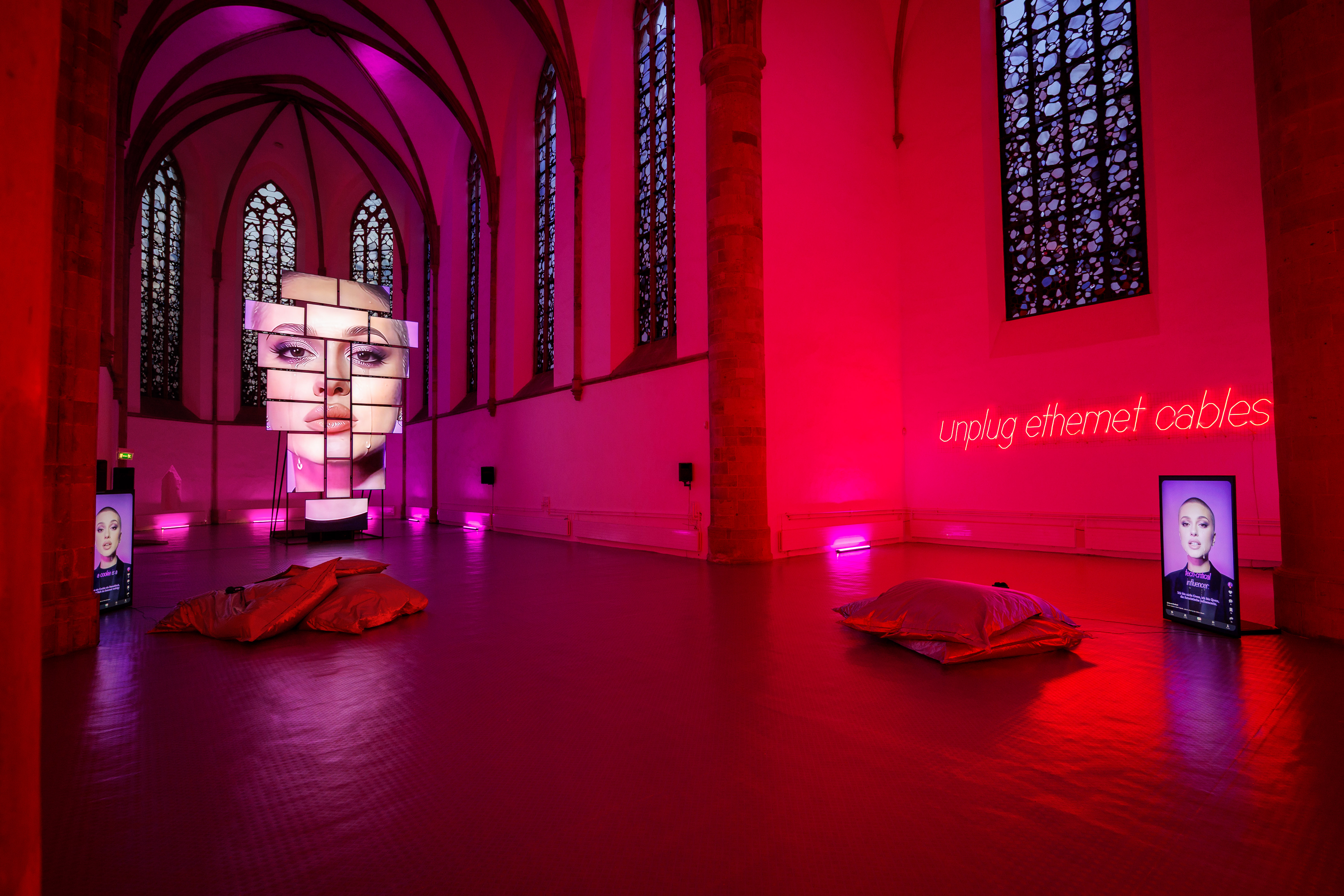
!Mediengruppe Bitnik, “Computer Says No”, Kunsthalle Osnabrück 2025. Courtesy the artists. Photo: Friso Gentsch
Everything is bathed in deep purple and red, generated artificially. Piercing sounds and a computer-generated voiceover fill the large space of the former Dominican church, now home to Kunsthalle Osnabrück. Entering the space creates an eerie atmosphere. In the new exhibition, ‘Computer Says No’ by !Mediengruppe Bitnik, the sacred space has been transformed into an interactive installation that takes a stand against tech fascism. Here, AI activist Qwen Stefani delivers a digital sermon warning about the risks of the internet, manipulative algorithms and the power of tech billionaires. Large neon signs and ‘Sabotage Cookies’ provide the audience with instructions for small-scale rebellious actions, offering a sense of self-empowerment in the digital space.
!Mediengruppe Bitnik, consisting of Carmen Weisskopf and Domagoj Smoljo, critically engages with digital media, the use of AI, and their influence on our society. In ‘Computer Says No’, they explore the impact of the abusive use of computers and the internet for political purposes on our lives. Who actually has power and control on the internet? How are we, as users, being misled? And how can we defend ourselves against it?
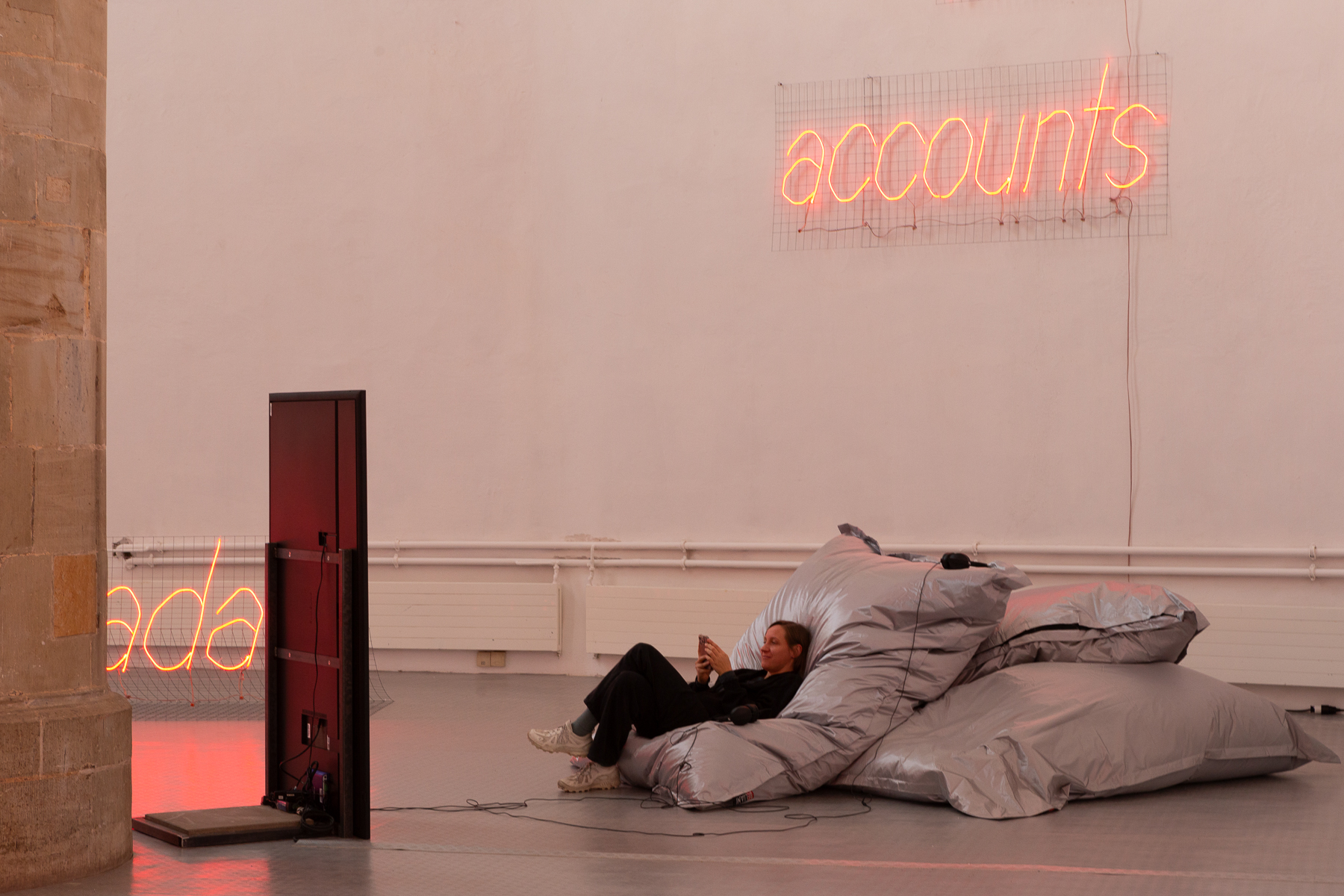
!Mediengruppe Bitnik, “Computer Says No”, Kunsthalle Osnabrück 2025. Courtesy the artists. Photo: Lucie Marsmann
META, Google, X and Amazon are just some of the platforms that have shaped our digital everyday life over the past few decades, while also making a handful of men billionaires. Hardly anyone worldwide doesn’t know or use them. Elon Musk, the co-founder of PayPal and the current CEO of X and SpaceX, is now one of the world’s most influential people – and the richest, too. Following Donald Trump’s re-election, Musk’s influence became apparent: he was able to act as an advisor and thus gain direct access to the political arena.
Apple is one of the few companies that embodies technology as a philosophy of life. Today, the company’s stores resemble cathedrals: they are spacious and bright, and have an almost sacred aura. Surprisingly, much space is devoted to the flawlessly presented, tiny devices. Apple becomes a worshipped religion and its stores houses of faith, modern pilgrimage sites for all ‘Apple disciples’, where tech enthusiasm and religious fervour mix in surprising ways. Having seen how technology has become an object of faith, it is worth looking at the works in Kunsthalle Osnabrück. These works question these mechanisms precisely.
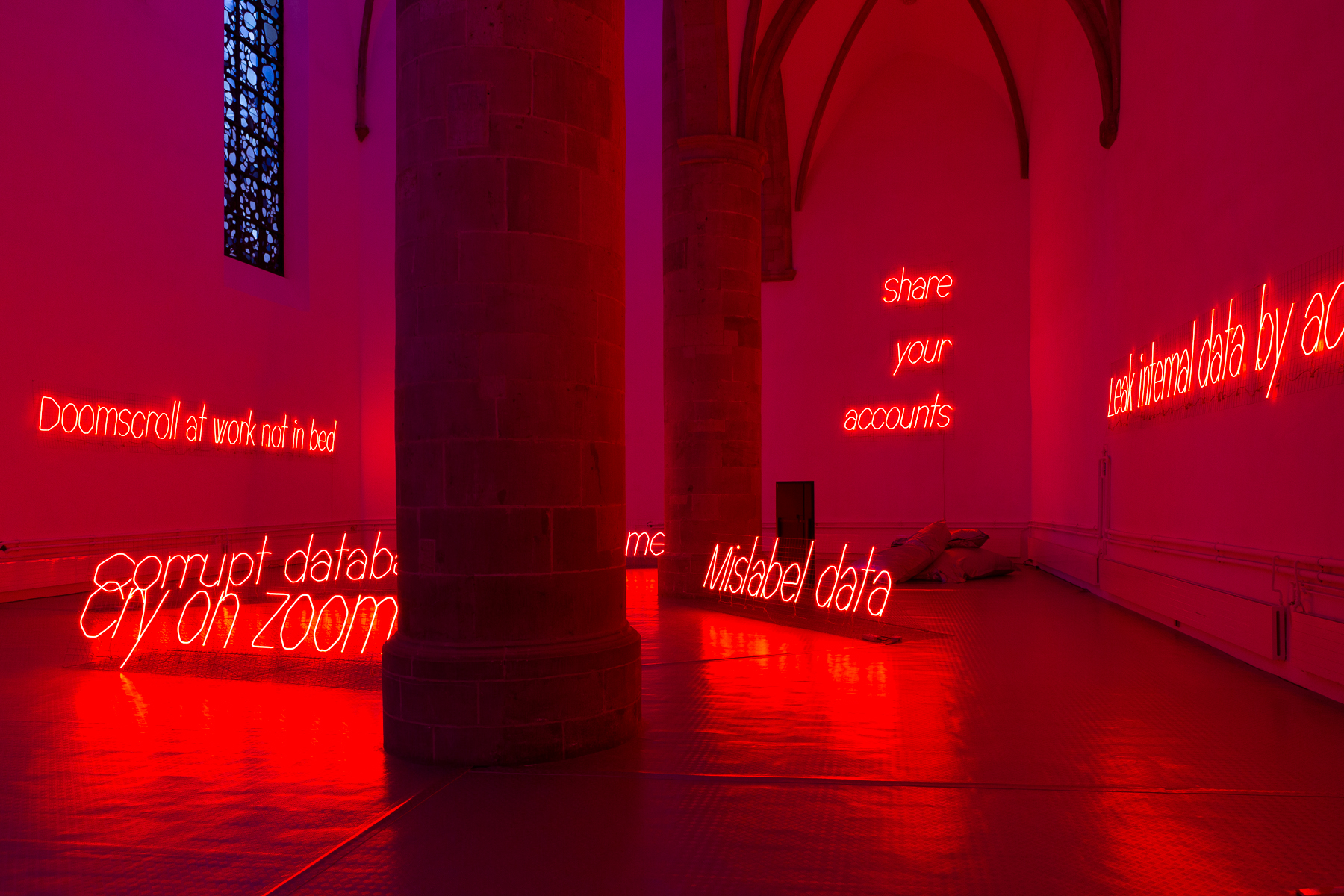
!Mediengruppe Bitnik, “Computer Says No”, Kunsthalle Osnabrück 2025. Courtesy the artists. Photo: Lucie Marsmann
All of the videos feature AI influencer Qwen Stefani, a name that should be familiar to fans of popular culture. That’s right: Gwen Stefani, the former frontwoman of the band No Doubt who has enjoyed success as a solo artist for many years. Since 2024, she has been the face of the controversial Hallow app, a platform for prayer and meditation. The project is financed by J. D. Vance, the US Vice President and right-hand man of Donald Trump, as well as the right-wing conservative entrepreneur Peter Thiel. Criticism of the app didn’t take long to emerge. It has been accused of failing to protect user data adequately and of promoting conservative ideologies and traditional gender roles. This example clearly shows how valuable personal data has become for political and economic interests, and how easily people seeking meaning or guidance can become dependent on technology. AI Qwen now uses short videos to warn people about this, which play in rapid alternation with videos from friends of !Mediengruppe Bitnik and theorists. In the altar area, where the altar once stood, Qwen Stefani also appears as a weeping Madonna in a continuous loop. Behind her, the church windows loom as she mourns the loss of democratic and free spaces on the internet.
Working together with an AI, !Mediengruppe Bitnik has updated the historical ‘Simple Sabotage Field Manual’ from 1944, which was originally published by the American intelligence service to provide citizens with tips for everyday sabotage in the fight against fascist regimes, for the present day. In the nave of the “Computer Says No” exhibition, the duo presents nine tongue-in-cheek suggestions in red neon, either glowing on the walls or placed in the middle of the path. These works hold up an ironic mirror to us: Just how dependent are we on the technology we created ourselves? ‘Forget the phone’, ‘Name files incorrectly’, or ‘Cry on Zoom’ are harmless gestures with subversive potential – small acts of rebellion against omnipresent tech fascism. Silver-wrapped fortune cookies are also being handed out in the room. Here, they function as ‘Simple Sabotage Cookies’ and expand the updated manual with an additional 14 instructions.
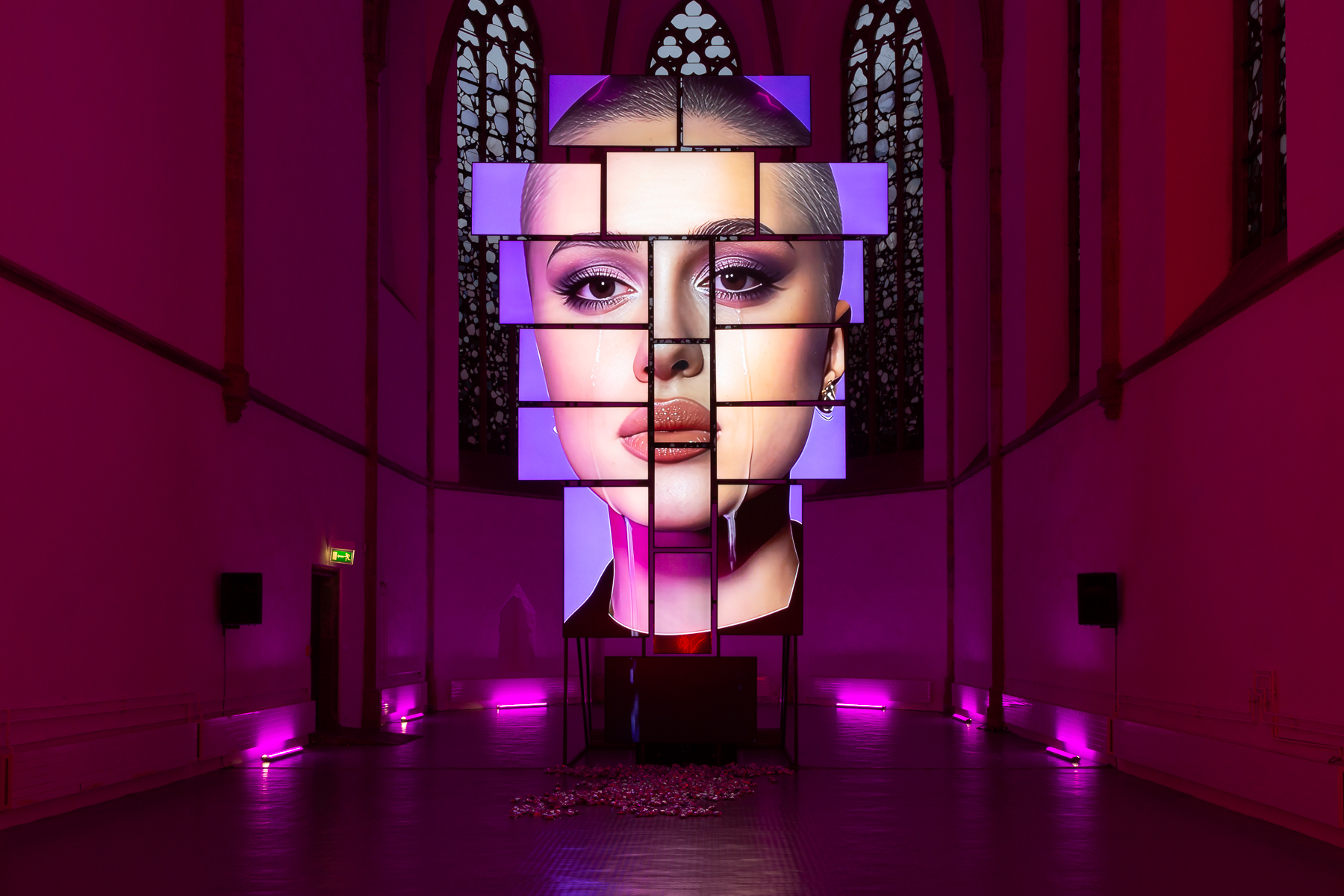
!Mediengruppe Bitnik, “Computer Says No”, Kunsthalle Osnabrück 2025. Courtesy the artists. Photo: Lucie Marsmann
Is fighting authoritarian forces with a bit of doomscrolling really the answer? It sounds tempting and simple, but of course it isn’t. ‘Computer Says No’ makes it clear that resistance in the digital age requires more than just likes and clicks. This exhibition is a playful invitation to build networks online and offline, and to reclaim small spaces of self-empowerment. It encourages us to question technology and systems critically, and to develop our own forms of protest.
Ultimately, we must ask ourselves how much power we are willing to cede to structures that have long seemed natural to us. Digital convenience cannot replace political thinking. Amidst doomscrolling and data collection, we require awareness, resolve, and the courage to take responsibility. Perhaps the little revolution begins the moment we consciously say “no” – to the algorithm, to the app, to our own passivity.
When? The exhibition “Computer Says No” runs until February 22, 2026.
Where? Kunsthalle Osnabrück, Hasemauer 1, 49074 Osnabrück
More information here. The exhibition is part of the second part of the annual theme “Geister” at Kunsthalle Osnabrück.
Disclosure note: Many thanks to Kunsthalle Osnabrück for the press invitation and covering travel expenses.